
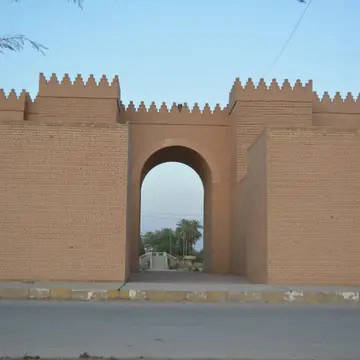
About this place
The ruins of Babylon south of Baghdad recall the capital of the Neo-Babylonian Empire, with gates, palaces, temples and walls that shaped the imagination of later civilizations.
History and context
Babylon was a major Mesopotamian center across successive eras and became the Neo-Babylonian capital in the seventh and sixth centuries BCE, notably under Nebuchadnezzar II.
Architecture and setting
The archaeological landscape preserves traces of city walls, monumental gates, palaces and sacred precincts; their arrangement conveys the scale of an imperial city.
Cultural significance
Babylon links archaeology to enduring traditions in literature and religion, while its urban and artistic legacy illuminates a formative chapter of Mesopotamian history.
Plan your visit
- Begin with a site plan so that individual buildings make sense as parts of a city.
- Ask a local guide to distinguish archaeological remains from later reconstruction, and label your photographs with the names of the features.
- Use the platform entry to review the location and confirm current entry arrangements before choosing a visit date.
Confirm current hours, fees and access with the responsible authority or service provider before visiting.
Location
Babil
32.54220, 44.42140
Open coordinates in mapsOpen this place on Mesopotamia Interactive Iraq map